Lap-Only Autoharps |
 |
| 


| Lap-Only AutoharpsWhen the autoharp was invented (about 1883) it was one of many similar instruments designed to make it easy for non-musicians to play music.Most of those instruments would be classified as zithers today. Rows of strings stretched over an irregularly-shaped box. Usually with sixteen or more strings for playing melodies and some feature that made it possible to play chords as well. (For more information on such instruments, check out our article "Autoharp Precursors and Competitors.") All of these instruments, were meant to be played in the lap or on a table. So were autoharps. Sometime later, autoharp players who needed to move around began holding autoharps in the "upright" position that is most common today. Over the years, most Oscar Schmidt autoharps were gradually redesigned to make that easier. But a small handful of autoharps were designed in such a way that they could never be played upright. They have to be played on the lap or on a table. These chiefly include:
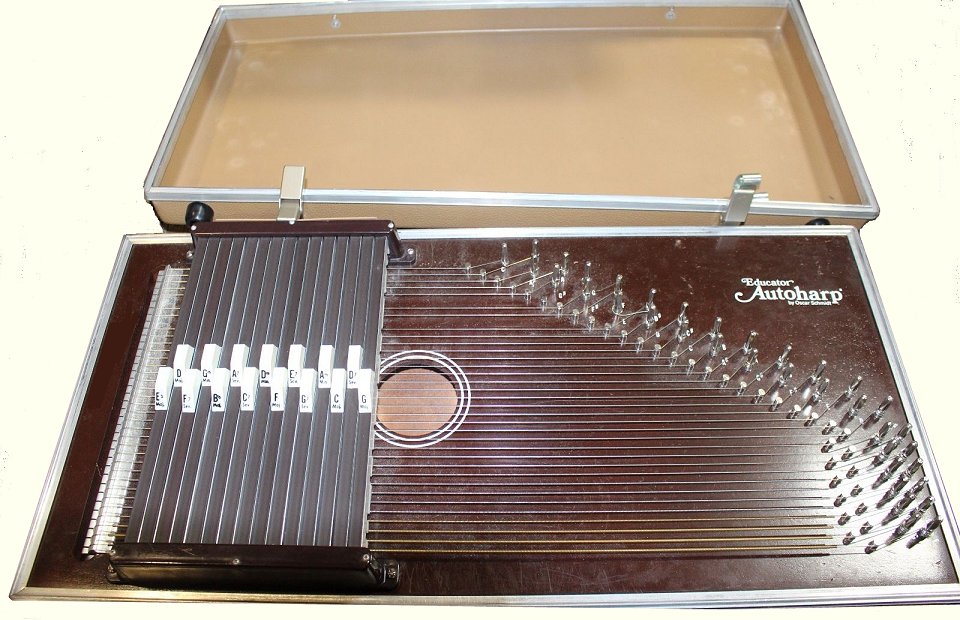
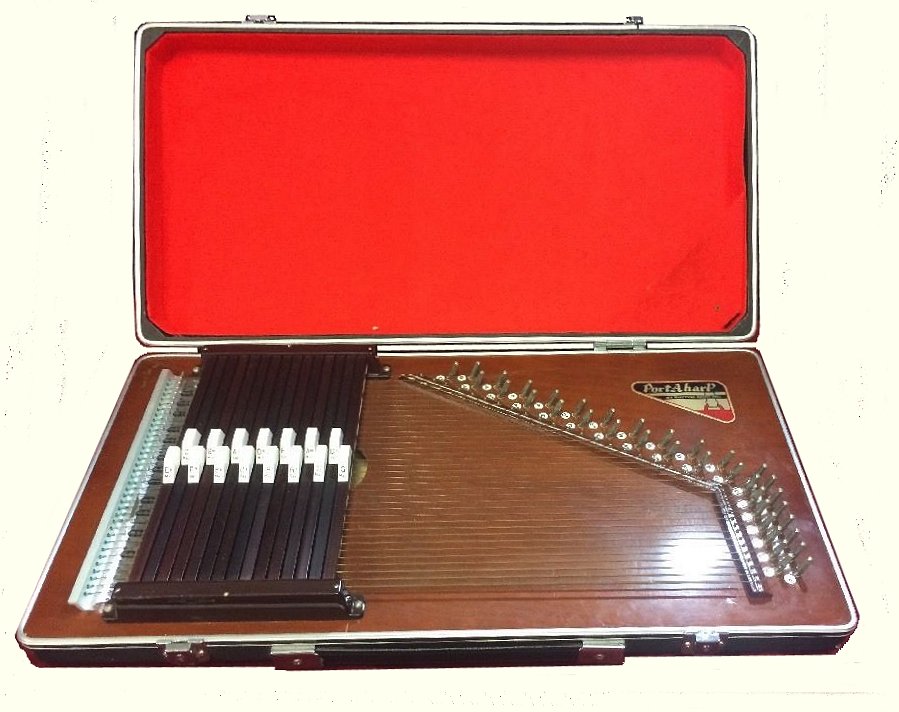
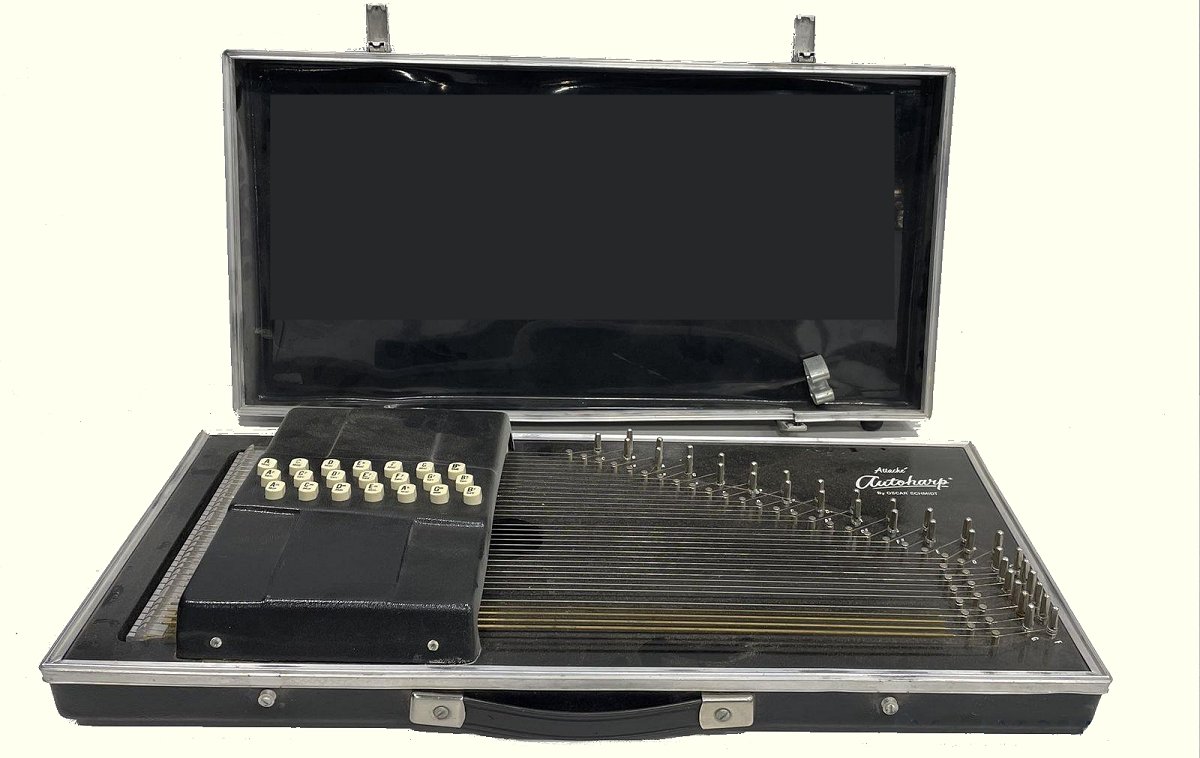
I love them both. Availability - Both classes of instruments were discontinued decades ago, but they still turn up on auction sites from time to time. Condition is always "questionable" but I've come up with both briefcase and Caroler autoharps that just needed cleaned up and tuned to play. Briefcase AutoharpsWhen I take an autoharp to a concert, at least one person usually says, "I remember my elementary school music teacher having one of those." The teacher may have had a standard autoharp, but more often than not, it was a briefcase autoharp - built into a case so it could easily be carried from room to room. Both Oscar Schmidt and Chromaharp built these, and both models turn up from time to time on the used market.
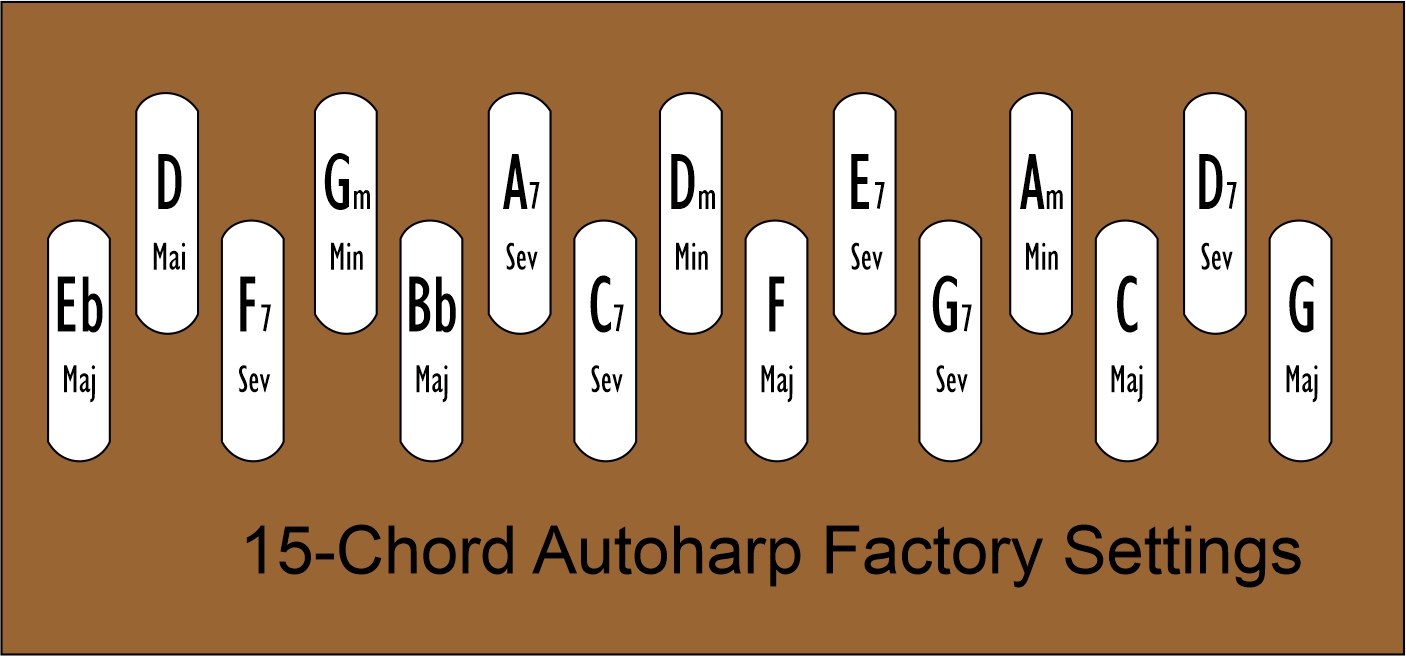
They're amost always 15-chorders, with the standard 15-chord setup.
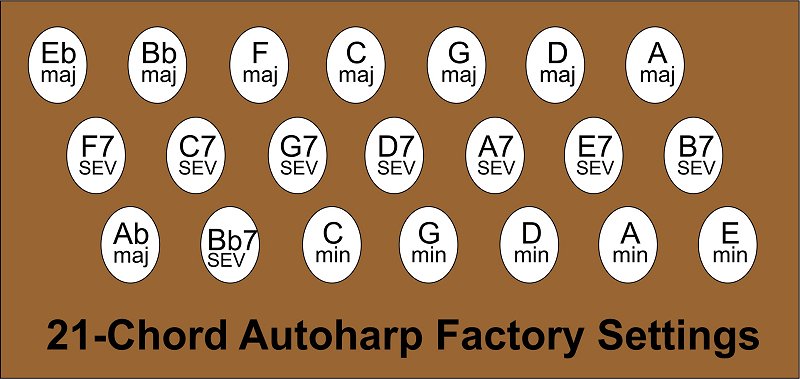
Ironically, the "Samsonite"-quality back may make them louder than standard 15-chrders, so great for classrooms and other circumstances where loudness is a virtue. I have one of each, and there's very little difference in quality. Much rarer are the 21-chord versions. Both of the ones I've seen came from Oscar Schmidt, the 21-chord Educator and the "Attache" (there should be an accent mark over the "e" in "Attache," but it comes out as garbage on some browsers). The "Attaches" I've seen are physically identical to the 21-chord "Educator," but they tend to be black.
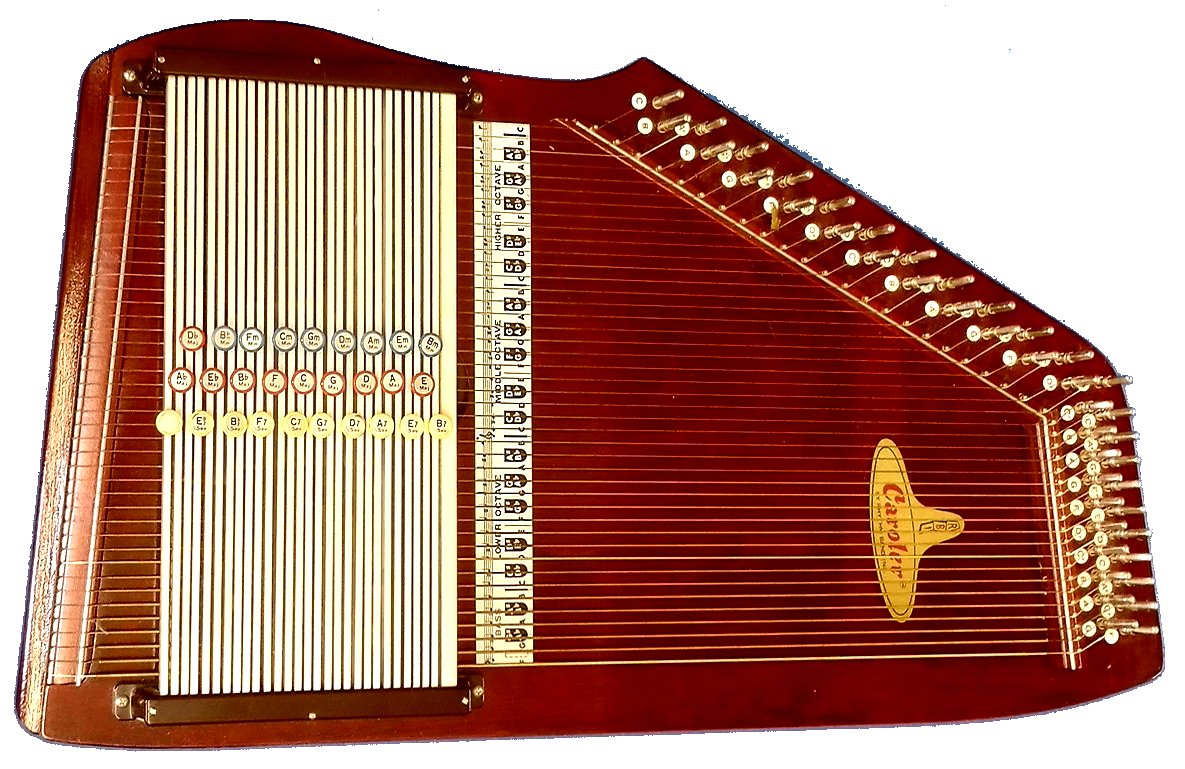
At least one autoharp teacher I know buys these whenever possible to have on hand for players who have physical issues that keep them from playing an autoharp in upright position, or from crossing hands if they play a standard autoharp in laptop position. RBI Chromaharp "Caroler"
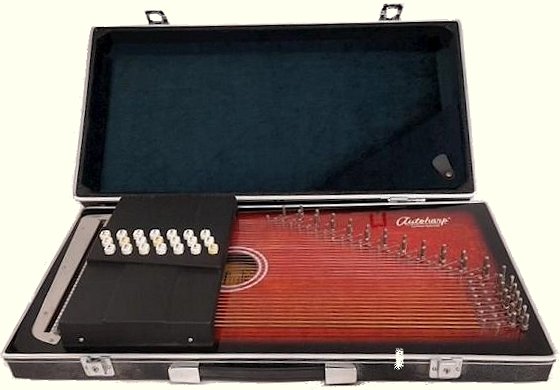
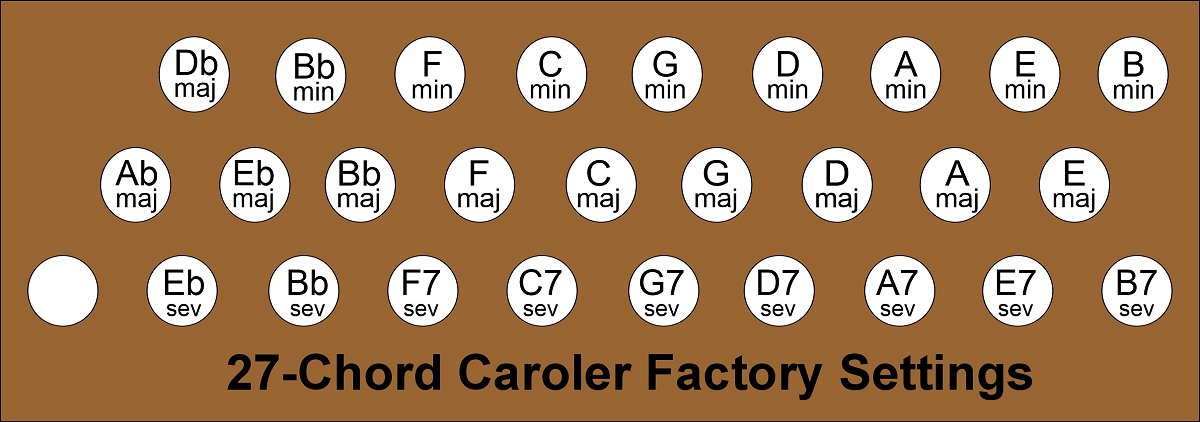
It was designed in the 1970s for small churches, community choirs, and other groups that couldn't afford a piano. It includes the ability to play in keys that standard autoharps don't allow like Ab and E major. It also allows you to play in more minor keys. Ironically, it's one of the few Chromaharp products that wasn't a close copy of an Oscar Schmidt instrument. That said, they didn't catch on as much as RBI hoped, and they went out of vogue when digital keyboards became available. But that works in your favor: many were retired early, and very few were dragged around or handled by children like standard autoharps. So they often come down to us in playable or restorable condition. Because it retains a chromatic scale in the middle and top octaves, anyone used to playing melodies on a standard 15- or 21-chord autoharp should be able to adapt to this quickly. That said, for most people, it's better (and louder) on a table or some sort of stand than it is on their laps.
Though the buttons for the minor and seventh chords seem to be reversed from Bowers setup, a person used to reaching around for those buttons should have little difficulty adapting to reaching across for them. The blank button at the lower right is for deadening all the strings at once. And if you come across one in playable condition, you can even order replacement strings from Greg Schreiber (they're not cheap, though). I love these, personally, but they have several potential minor downsides.
Don't get me wrong, I love my Caroler. Its tone, volume, range, and available chords are superior to any other mass-produced autoharp. But it's not as easy to maintain as most autoharps, so ownership is probably not recommended for beginners. Note: For more details about Chromaharp Carolers, please click here. ConclusionIt's possible to play vintage autoharps (pre-1935) in lap position. It's also possible to move the chord bars up to play modern 15- or 21-chord autoharps in lap position.But it's far easier to play one of these models in lap position. Yes, they're all long discontinued, but as of this writing (August, 2025), they're still turning up on auction sites. The lid on briefcase autoharps (Educator, Portaharp, and Attache) offers built-in protection, so they're less likely to be badly damaged More articles are likely to come soon. In the meantime, I hope these articles help answer your questions about these under-rated instruments.
And please stay in touch! - Paul Race
All material, illustrations, and content of this web site is copyrighted ? 2001, 2002, 2003, 2004, 2005, 2006,
For questions, comments, suggestions, trouble reports, etc. about this page or this site, please contact us.
| |||||||||||||||||||||||||||||||||||||||||||||||||||||||||||||||||||||||||||||