
|
Autoharp Chord Substitutions
Fellow autoharpers, do you ever get frustrated because a song you want (or need) to play has one or two chords that aren't on your autoharp? Would it help to know that there may be ways to "fudge" the missing chord so you can stiill get through the song, even if your autoharp, say, sounds a little thin on that measure?
This is your "cheat sheet" for getting through those times. None of the solutions we list are perfect, and if you have a chance to put the song in a key that your autoharp fully supports, you'll probably be better off. But if you can't change the key, we're trying to help.
Autoharps have only a certain number of chords, be it 3, 5, 6, 8, 10, 12, 15, or 21.
If you usually stick to one or two genres, you can probably find an autoharp that has most or all of the chords you'll need to play most of the songs you want to play, especially if you get to choose the key they are played in.
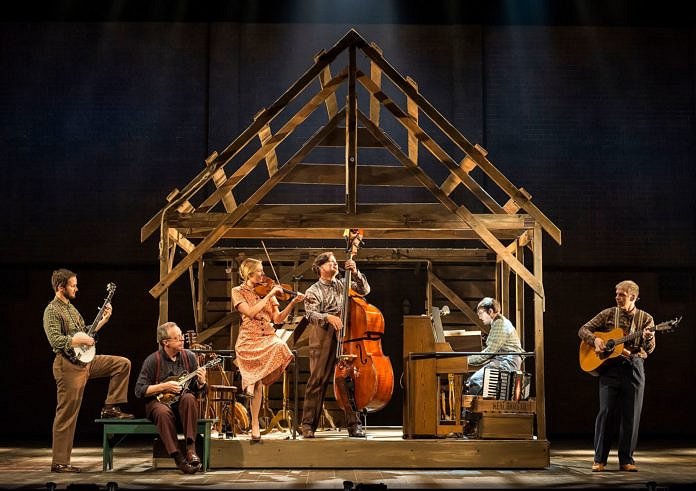
But you may get into a situation where you're expected to accompany a song that specifies chords your autoharp doesn't play. Perhaps you're accompanying worship, or sitting in with a Bluegrass band, or even asked to play the autoharp part in a production like the musical Bright Star*.
The chord indicators in printed music always specify guitar chords, not autoharp. And guitars can play thousands of chords.
Don't despair. In quite a few cases, the guitar chords are just fancy versions of chords you can play on the autoharp. If the arranger had taken the time to write out an "autoharp" version, he or she might have specified compatible chords that you already have buttons for. But hardly anyone ever takes the time to do that.
Please note that this article is about chords to strum, usually in an ensemble that has other instruments like banjo, mandolin, and guitar, any of which could be playing the melody. Autoharp parts in such setting almost always just specify strumming chords. (If you actually have to play melody in keys your autoharp does not support well, you may be looking at reconfiguring your autoharp, and that's beyond the scope of this article.)
Also, don't take the specified guitar chords too seriously. In many modern arrangements (especially of pop and worship music), the guitar chord written isn't even necessarily the best chord on guitar, but it's what the songwriter scratched out, and no one bothered to check. For example "ninth" chords in worship choruses are almost always bogus**. There might be more "wiggle room" than you would expect.
How do you work around chords you don't have? You can substitute chords that fit the overall harmony of the measure in question, and sometimes you press two chord bars down at the same time that give you at least some of the notes you need.
Yes, the two-button "solution" will always sound weaker than playing full chords, and some experts will tell you not to bother. But they're not the ones in the room trying to hold their own with other musicians who don't care if you have a Bbaug button on your autoharp or not.
This Seems More Complicated Than It Is. Don't worry. Most songs that need a substitute chord only need one or two. Once you figure out the best substitute, you write that into your music and keep going. We are listing over forty possible substitutions in this article, but you'll probably never need to use more than one or two. We're just trying to cover as many bases as we can.
Short-Cutting to the Workaround? If you don't care how this works, or why some kinds of substitutions work better than others, and you just want to quickly find a workaround for a specific chord in a song you're trying to play, feel free to bypass the paragraphs below and jump right to the chart. Try the suggestions, incorporate the suggestion that works best into your playing, and move on.
Note: This is a first draft of an article to help you in such situations. It almost certainly contains mistakes and omissions, but we'll keep working on it. In the meantime, folks are already finding it helpful, so we're leaving it up while we iron out the wrinkles.
There are three basic kinds of substitution:
- Direct Chord Substitution - Pressing the chord bar for a related chord that works in place of the specified chord. For example:
- You can often substitute one chord for a more complex version of the same chord, such as substituting Bb for Bb7. Such substitutions are usually pretty straightforward and sound reasonably full.
- Additionally, you may be able to substitute a major chord for its relative minor, especially if someone else is playing the full chord on their instrument. So, in a group setting, you may be able to "get away with" substituting D major for B minor. If someone else is playing a low B, hardly anyone will notice that you've left that note out.
- Two-Chord-Bar Substitution - Pressing two chord bars at the same time to get at least some of the notes. This is where it gets "iffy."
- Such substitutions generally sound thin, because fewer strings are sounding.
- The chords will be missing notes. Played by themselves, most of these "chords" won't sound like the chords they're substituting for.
- But at least you have something to play and you won't have to drop out entirely.
- And with any luck, someone else is playing the whole chord on guitar or whatever, and no one will notice that you're "missing notes."
- Single-note Substitution - Pressing two chord bars together to give you the root note of a chord that there aren't any other substitutions for. This is the weakest of all, but, again, it gives you something to play.
We will have suggested substitution lists near the end of this article, but it's impossible to cover every possible chord, so we're also providing an explanation of why certain substitutions work, and why some work better than others.
Starting with Fifteen or Twenty-One Chords? - If you have a 21-chorder, you will have more options for substitutions of both types. But even 15-chorders give you more choices than you might expect.
That said, our list of substitutions may suggest pushing chord buttons that don't appear your autoharp.
Most 21-chorders come with Ab, Eb, Bb, Bb7, F7, F, C, Cm, C7, G, Gm, G7, D, Dm, D7, A, Am, A7, E7, Em, and B7. All of our suggested substitutions below should work on a standard 21-chorder.
Most 15-chorders come with Eb, Bb, F, F7, C, C7, G, G7, Gm, D7, D, Dm, A7, Am, and E7. Most, but not all of our suggested substitutions below should work. If our suggestion names a chord that your autoharp doesn't have, you may have to default to the "single note substitution" for that chord (described below).
There are some variations. For example, a few autoharps include E major, but the vast majority don't. We'll be working from the standard lists as much as possible.
We Can't Cover All the Bases - thousands of chords have been used in music in the last four centuries. We're going to address the chords you're most likely to encounter.
More About How These Substitutions Work
We list the most common/likely substitutions below. But in case we've missed one you need or maybe you just wonder how we came up with these the following section describes the principles behind each kind of substitution.
Direct Chord Substitutions
Many complex chords are built up over standard chords. For example, D minor seventh (Dm7) is built by adding a C to a D minor chord. But playing a D minor (D, F, A) when everyone else is playing Dm7 (D, F, A, C) won't upset anybody; in fact, it will sound pretty good. If you're supposed to play a Dm7,9 chord, same thing.
One complication is that modern songbooks don't get edited closely. So something that is labeled a D9 chord one place might be labeled a D2 chord in another book, or even on another page
Here are some general principles you should be able to apply:
- Seventh Chords - in 99.9% of cases, a "seventh" chord is a major chord with one additional note, what music theory people would call a "flatted seventh." So a C7 (C, E, G, Bb) chord would be a C major chord (C, E, G) that also includes a Bb, the flattened version of the seventh note of the
C major scale.
Most major chords on the autoharp already have a seventh chord equivalent. But if your autoharp has a major chord that does not have a seventh (say, Ab or Eb), just play the major chord equivalent.
- A Major Seventh chord ads an unflattened seventh note. So a CMaj7 is C, E, G, B. Technically, you should be able to get away with a C chord (C, E, G), but if the melody is dependent on that B note, and other people are playing the full chord, you might find that an Em sounds better there. You won't have a C in the bass, but you'll have the other notes of the chord.
- Ninth Chords (and, Sometimes, "Seconds") - in most cases a "ninth" chord is a major chord that includes an extra note that is a full step above the note that the chord is named for. So a "D9" chord includes an E; for example: D, F#, A, D, E. If that's what the transcriber really wanted to hear, you can substitute the major chord, and nobody would object. (Chords labeled "seconds" may also fall into this category, but they may not.)
That said, there are at least two kinds of chords that are often labeled as "ninth" or "second" chords but deserve special treatment.
- Sevenths with Added Ninths - In Jazz and mid-century popular music, chords labeled "ninths" often include flattened sevenths as well. Sometimes they're shown like "C7(add 9)" or some such. But sometimes, they're shown like "C9." Again, you can substitute a C major, but a C7 might sound better.
- "Ninths" (or "Seconds) with no Third - In some cases, a chord that actually consists of C, D, and G is labeled (or mislabeled) "C9" or "C9(no3)," or "C2" or "C2-3" or some such) . If you can determine that this is the intended chord, you might experiment with an "open fifth" chord (below).
If you have a chance to "test" your chord against the chords the guitarist or pianist is playing, you'll have a better chance of choosing the best stand-in.
- E Major This is a "special case." Only a handful of commercial autoharps have been built with an E major chord, There's not a great substitute, but if you press down the E7 chord bar and play only strings 1-11 and 28-35, you might get away with it. Or if your autoharp has Em as well as E7, pressing them both will give you a sort of E chord. It will lack the middle note of the chord (G#), but, again, if other folks are playing the full chord, no one will notice.
Relative Major Substitutions
Sometimes there's no good substitute for a minor chord. In such cases it is sometimes possible to substitute the "relative" major chord. That is the chord three steps up that uses the same scale. For example, C major is the "relative major" of Am. F is the "relative major of Dm," and so on.
The "relative major" has two of the notes of the missing minor chord, but it lacks the note the minor chord is named for.
For example, Am consists of A, C, and E. C consists of C, E, and G. If there is a bass player, or if someone else is playing A minor on, say, guitar, you might could get away with playing a C, at least softly. The other instruments will fill in the A you are missing and nobody will notice, although between the two instruments, you'll actually be playing an Am7 chord, because you're also playing G notes.
That said, this doesn't always work. and it seldom works when you are playing by yourself.
When we list "Relative Major Substitutes" below, know that it's up to you to determine whether the chord is working or not.
Two-Chord-Bar Substitutions
Most autoharps lack several kinds of chords: No autoharp even has all major or minor chords. Sometimes you can "fudge" a substitute by pressing two chord bars at a time, This will give you incomplete, thin-sounding chords, but at least you don't have to drop out completely.
- "Suspended Fourth" chords have the middle note (the "third") raised up a half-step (giving you a "fourth"). For example, Csus4 is C, F, G. Usually they're used for transitions, and they usually resolve to the seventh chord with the same root. For example, a song in F might have F to Bb to Csus4 to C7 to F. If you're playing on your own they may not even be necessary - just try playing the C7 or whatever it resolves to.
But if you're in a situation where you need to make the attempt, you may be able to play two chords at a time as a substitute. You can't play suspended fourths exactly, but you can play a combination of notes that don't clash with the chords the rest of the ensemble is playing.
If, for example, you are asked to play a Dsus4, you might play D7 and Dm at the same time. You won't get a G (which is the fourth note that gives the chord its name. But you'll get D, A, D, A,D, A, And then, when it resolves to the D7, you take your finger off the Dm, and the overall effect will be similar to resolving from a real D(sus4)
Finally, you should know that suspended fourth chords are often mislabeled. For example, Dsus4 is often mislabeled D+4 or D4. (Remember what I said about sloppy transcription above.) So if you see such labels try the substitutes for Dsus4 before you panic.
- Diminished Chords are like minor chords with the fifth note flatted. So D diminished ("Ddim") is D, F, Ab. Often they're structured as "diminished" seventh chords. So "Ddim7" is D, F, Ab, B. "Diminished sevenths" are actually more common. But either way, you work from the root note that is specified.
You can't play a diminished or diminished seventh on most autoharps. But you can sometimes play a "chord" that has the first two notes. So if you're supposed to play a Ddim or Ddim7, you might could play a chord that includes at least D and F. For example, you could press the D minor and G7 chord bars at the same time, you'll get D, F, D, F, D, F. How does this work?
- Pressing the D minor chord bar gives you D and F, but cancels out the Bs and Gs in the G7 chord bar.
- Pressing the G7 chord bar gives you D and F but cancels out the As in the Dm chord bar.
It's not a full-sounding chord, and not a true D diminished, but at least you don't have to drop out.
- Minor Chords- The same sort of two-chord solution can work for minor chords you don't have on your autoharp. For example, a B minor chord is (B, D, F#). But very few autoharps have B minor built in. If you play an E7 and G chord, you'll get B, D, B, D, B, D. How does this work?
- The E7 chord gives you B and D, while cancelling out the Gs in the G chord bar.
- The G chord bar gives you B and D, while cancelling out the Es and G#s in the E7 chord bar.
Again, it will sound thin, but at least you'll have something to play.
Yes, you may also be able to substitute D for Bm, as mentioned above (a Relative Major substitution). Try both and decide which one serves the song better.
- Augmented Chords are like major chords with the top note sharped. So Caug (sometimes shown as C+) would be C, E, G#. No that doesn't come easily on an autoharp. But you can play a combination of chord bars that provide just C and E. For example, pressing the C and Am chord bars simultaneously. No, it doesn't give you an actual augmented chord, bt it gives you two notes of the chord, and that's something.
Note: Some Two-Chord-Bar Substitutes give you two notes from the chord but actually leave out the root note of the chord. If you're playing with a guitar or bass player, no one will notice, and you'll sound just fine.
Yes, this may all sound very complicated, but we wanted to give you the theory behind our suggestions below.
Single Note Substitutions
Sometimes there's no good substitute at all. For example, there is no good substitute for Ab minor. In such cases if you want to play something, you can play a chord combination that dampens every note but the root note of the chord. For example, playing E7 and Ab at the same time will dampen every note but Ab. The sound will generally be very thin (especially in this example, since the lowest G#/Ab on an autoharp is pretty far up the scale), but, again, at least you have something to play.
When Substitution Isn't Enough
As mentioned above, many of these substitutions sound thin or depend on other instruments to give the full chord. They're meant to be used when your autoharp is missing only one or two of the chords you need.
As an example, if you're going to play "Take Me Home, Country Roads" in G, you need an Em. If your autoharp doesn't have an Em, you could play a G chord under the words "Almost Heaven," then, to substitute for Em, you could push down the E7 chord bar, then start on the 16th string and strum toward your belly. Most people would never notice that you weren't playing a complete Em (or Em7) chord. And the rest of the chords in that song are already on your 'harp.
But if the whole song had to be in Em, none of the substitutions for Em would hack it. If you're playing solo, you can just transpose the song down to Dm. But if you have to play in Em, you would need an autoharp that has E minor built in, and probably B7 as well.
In this specific case, you'd have options - almost all 21-chord autoharps have both of those chords.
If you need to play in the key of E major, many custom instruments and the recently discontinued Oscar Schmidt "Americana" provide that chord as well.
Our article "Autoharp Factory Chord Setups" tells you which commercial autoharps had which chords built in. You might be able use this as a guide to track down an autoharp that already has the chords you need built in.
But if you're playing where no autoharp player has gone before, such as a concert piece or musical where the autoharp part was an afterthought, you might even need to reconfigure your autoharp. Again, that's beyond the scope of this article but our "Tweaking Autoharps - Overview" article should give you a glimpse of what such adjustments involve.
In short, these substitutions work best if you only have one or two substitutions in each song, and none of them will really enable you to play a tune in a key there isn't a button for.
Chord Substitution Suggestions
Some of your autoharps may have some of the chords we list as potentially needing substitutions. If that's the case, by all means just use that chord bar.
Also, some of these substitutions may substitute for multiple chords. Generally, these are not complete chords, and will sound comparatively thin, but at least you won't need to drop out entirely.
Don't Panic! The list below is very long, but it includes dozens of chords you may never see. And most music that uses these chords only uses one or two of them in any given piece. Once you've found and tried a substitution that works for you in this song, just write the names of the chord bar(s) over the chord names on the sheet music and go from there.
Test Drive if You Can - Admittedly, playing by yourself won't give you the full picture on many of these substitutions - then again, if you're going to be playing by yoursef, you probably won't need most of them. But if you're going to be playing with other musicians and you need to use a substitute chord or chords, try testing the suggested substitution(s) out while they're playing their part. Some substitutions will sound better than others, and some won't sound right at all in certain situations. You don't want to be in front of audience when you find that out.
Finally, if you come across a chord you need that we haven't published a workaround for, please contact us. If we can find a workaround, we'll let you know ASAP.
The following list focuses on the chords you're most likely to need substitutes for.
| Chord Needed |
Potential Substitution |
Kind of Substitution |
Notes Played |
Notes Missing from Cord |
Additional Tips |
| C9 |
C |
Direct Chord Substitution Substitution |
C, E, G |
D |
If you're playing jazz, try C7 also. |
| C2 no 3rd (sometimes labeled C9) |
C and Cm |
Two-Chord-Bar Substitution |
C and G |
D |
Use if the actual chord being played is C, D, G |
| C(sus4) |
C (or C7) and Cm |
Two-Chord-Bar Substitution |
C and G |
F |
If you're playing solo, just try playing C7 instead. |
| C6 |
C or Am |
Direct Chord or Relative Minor Substitution |
C, E, G (and maybe A) |
A (if you're playing a C chord) |
C is usually better, but if you are playing with a guitar or bass player, you could try Am. |
| Cm |
Eb |
Relative Major |
Eb, G, Bb |
C |
Works best if someone else is playing guitar or bass |
| Cm7, Cm7,9 |
Cm |
Direct Chord Substitution |
C,Eb, and G |
Bb |
If you don't have Cm, try the Eb substitution above |
| C dim |
Cm and Ab |
Two-Chord-Bar Substitution |
C and Eb |
Gb (F#) |
Works best if someone else is playing the full chord on guitar or piano. If you have a 15-chorder, there is no good substitute for this chord. You could play C and F to get a Single Note Substitution. |
| C aug |
C and Am |
Two-Chord-Bar Substitution |
C and E |
G# |
Works best of someone else is playing a full augmented chord on, guitar or piano |
| C#m |
E (if you have it) |
Relative Major |
E, G# |
C# |
Works if you have an E chord bar and someone else is playing guitar or bass. If you don't have an E chord bar, try playing E7, but strum only strings 1-11 and 28-35 |
| D |
Dm and D7 |
Two-Chord-Bar Substitution |
D and A |
F# |
If you're playing jazz, try D7 also. |
| D9 |
D |
Direct Chord Substitution |
D, F#, A |
E |
If you're playing jazz, try D7 also. |
| D2 no 3rd (sometimes labeled D9) |
D and Dm (or D7 and Dm) |
Two-Chord-Bar Substitution |
D, A |
E |
Use if the actual chord being played is D, E, A |
| D(sus4) |
D (or D7) and Dm |
Two-Chord-Bar Substitution |
D and A |
G |
If you're playing solo, just try playing D7 instead. |
| D6 |
D |
Direct Chord Substitution |
D, F#, A |
B |
Works in most cases |
| Dm |
F |
Relative Major |
F, A |
D |
Only necessary if you don't have Dm on autoharp. Works best if someone else is playing guitar or bass. |
| Dm7, Dm7,9 |
Dm |
Direct Chord Substitution |
D, F, A |
C and or E |
If you don't have Dm, try the F substitution above |
| D dim |
Dm and G7 |
Two-Chord-Bar Substitution |
D, F |
Ab |
Works best if someone else is playing guitar or bass |
| Eb7, Eb9, Eb6 |
Eb |
Direct Chord Substitution. |
Eb, G, Bb |
Db or C, depending on the listed chord. |
Works in most cases. |
| Eb(sus4), Eb2(no 3rd), Ebm, Ebm7, Ebdim |
Eb and Ab (if you have it), or Eb and B7 |
Single Note Substitute |
Eb |
Gb, Bb, Bbb, others, depending on the listed chord. |
Gives you only a single note. If you don't have an Ab or B7 chord bar, you're probably out of luck. |
| Eb aug |
Eb and Cm |
Two-Chord-Bar Substitution |
Eb and G |
B natural |
Works best of someone else is playing a full augmented chord on, say, guitar or piano |
| E, E6, E9 |
E7, but strum only strings 1-11 and 28-35 |
Direct Chord Substitution |
E, G#, B |
If you're supposed to be playing E6 or E9, you're "missing" the C# or F#, respectively |
If you're playing jazz or blues, try E7 also. |
| Esus4, E2(no 3rd) |
E7 and Em (if you have them. |
Two-Chord-Bar Substitution |
E, B |
A or F#, respectively |
If you're playing solo, try replacing Esus4 with E7 instead. |
Em, Em7, Em7,9 |
C, A7 |
Two-Chord-Bar Substitution, other options |
E, G |
B, possibly D or F# |
Only necessary if you don't have Em on your autoharp. Alternatively, you could use G as a Relative Major Substitution, or play only strings 1-16 on an E7 chord (substituting for Em7) |
| Edim |
C, A7 |
Two-Chord-Bar Substitution |
E, G |
Bb |
Works best if someone else is playing guitar or bass. |
| F7, F6 |
F |
Direct Chord Substitution. |
F, A, C |
Eb or G, depending on the listed chord. |
Works in most cases. |
| F(sus4), F2(no 3rd), Fm, Fm7, Fdim |
F, Bb |
Single Note Substitute |
F |
Gb, Bb, Eb, others, depending on the listed chord. |
Gives you only a single note |
| F aug |
F and Dm |
Two-Chord-Bar Substitution |
F and A |
C# |
Works best of someone else is playing a full augmented chord on, say, guitar or piano |
F#, F#7, F#7,9, F#(sus4), F#9, F#dim |
D, B7 |
Single Note Substitute |
F# only |
C#, others, depending on the chord you're substituting for. |
Gives you only a single note |
F#m, F#m7 |
A |
Relative Major |
A, C# |
F# |
Works best if someone else is playing guitar or bass. Alternatively, try the single note substitution above. |
| G6, G9 |
G |
Direct Chord Substitution. |
G, B, D |
A or D depending on the listed chord. |
Works in most cases. If a G9 in Jazz, try G7 |
| Gsus4, G2(no 3rd) |
G and Gm |
Two-Chord-Bar Substitution |
G, D |
C or A, respectively |
Works in most cases. |
| Gdim |
Eb, C7 |
Two-Chord-Bar Substitution |
G, Bb |
Db(C#) |
Works best if someone else is playing guitar or bass. |
| G aug |
G and Em |
Two-Chord-Bar Substitution |
G and B |
D# |
Works best of someone else is playing a full augmented chord on, say, guitar or piano |
| Ab7, Ab6, Ab9 |
Ab |
Direct Chord Substitution. |
Ab, C, Eb |
Gb(F#), F, or Bb, depending on the listed chord. |
Works in most cases. |
| Abm, Abdim, Ab(sus4), Ab(aug) |
Ab and E7 |
Single Note Substitute |
Ab only |
Cb(b), Eb, Db, or E, depending on the listed chord. |
Will sound very thin, sorry! |
A
(Two
Choices) |
A7, but strum only strings 1-16 and 33-36 |
Direct Chord Substitution |
A, C#, E |
|
If you're playing jazz or blues, try A7 also. |
A7 and Am |
Two-Chord-Bar Substitution |
A, E |
C# |
If you're playing jazz or blues, try A7 also. |
| A9, A(sus4), A2(no 3rd) |
A7 and Am |
Two-Chord-Bar Substitution |
A, E |
B or D |
If you're playing solo, try A7 instead. |
| Am7, Am7,9 |
Am |
Direct Chord Substitution |
A, C, E |
G and or B |
|
| Adim |
Am and F |
Two-Chord-Bar Substitution |
A, C |
Eb |
Works best if someone else is playing the full chord. |
| Bb9 Bb7, Bb7,9 |
Bb |
Direct Chord Substitute |
Bb, D, F |
Ab, C, or others, depending on the listed chord. |
|
| Bb(sus4), Bb2(no 3rd)
| Bb and Eb |
Single Note Substitute |
Bb |
Db, F, others, depending on the listed chord. |
Gives you only a single note |
| Bbm, Bbm7, Bbdim |
Bb and Dm |
Two-Chord-Bar Substitution |
D, F |
Bb, others, depending on the listed chord. |
Works best if someone else is playing guitar or bass. |
| Bb aug |
Bb and Gm |
Two-Chord-Bar Substitution |
Bb and D |
F# |
Works best of someone else is playing a full augmented chord on, say, guitar or piano |
| B, B6, B9 |
B7, but strum only strings 1-18. |
Direct Chord Substitution |
B, D# (Eb), F# |
If you're supposed to be playing B6 or B9, you're "missing" the C# or F#, respectively |
If you're playing jazz or blues, try B7 instead. |
| Bm, Bdim, Bm7 |
E7, G |
Two-Chord-Bar Substitution |
B, D |
F# (or F if you're replacing a Bdim chord, A if you're substituting for a Bm7) |
Works best if playing with other instruments. Alternatively try D as a relative major substitution. |
Other Autoharp Playing Resources
- Playing Autoharp Overview - Introdution to basic playing styles.
- Your First Autoharp - Explains how to get started even if you have a wonky old 'harp and know nothing about it.
- Transposing Keys on an Autoharp - Autoharps support some keys better than others. Often a song that is too complex to play in D is easy to play in C. Or maybe the song you're playing is too high or too low for you to sing. Often you can "transpose" the song to another key simply by moving your fingers over a button or two.
- Autoharp Chord Substitutions - For when you encounter music that specifies chords your autoharp can't seem to play. Some of the suggested substitutions sound a little thin or lack notes you'd expect to hear, but at least they give you something to play.
- Bringing Your Autoharp to a Jam Session - Playing random songs "round-robin" with other musicians is fun and a great learning experience. Here's what to expect.
- Jamming 3-Chord Songs on 12- and 15-Chord Autoharps - If you have a 12- or 15- chord autoharp, you can still play along with most "jams." It just takes a little adjustment, and learning two or so chord substitutions.
- Your First Autoharp (Publication) - A downloadable 60+-page booklet that contains much of the information we've published online in an easy to use format, currently available from Etsy.
- Intro to Autoharp (Booklet) - A free, 4-page document I use at my clinics for beginners. You may print it for your personal or teaching use, as long as you retain the copyright information.
Alternative Autoharp Setups
Many advanced autoharp players reconfigure their instruments to include chords they need frequently, while "sacrificing" chords they never need.
I'm not claiming that you could reconfigure your autoharp for one song, or even, necessarily, for one evening
But if you find yourself using the same workarounds frequently, it may be time to consider whether you really need, say, that Ab. If you're not sure, your best first step might be to order a chord bar "blank" and cut the felts for the new chord you need. Then you can always put things back to "normal" if you need to. There's a lot of information on that approach and others online.
For information on reconfiguring autoharps, you might find the following articles helpful: (There are a lot of resources because there are a lot of approaches.)
- Autoharp Repair Overview - things to know before you get out the screwdriver.
- 15-Chorder Tweaking Overview - An overview of the kinds of modifications people often perform on their 15-chorders.
- Chromatic 21 Tweaking Options - An overview of the most common modifications people perform on their 21-chorders while still leaving them chromatic.
- Making Your Autoharp Folk- and Bluegrass-Friendly - An overview of the most common updates that allow you to play most Folk, Bluegrass, and Country music.
- Making Your OS73C Folk- and Bluegrass-Friendly - A look at the process for equipping an OS73C or OS73CE to play chords that Folk, Bluegrass, and Country players need.
- Video: Cutting New Chord Bars for an OS73C - Shows how to cut the chord bars required for the previous article. (You can't buy precut chord bars for the OS73C or OS73E.)
- Simplest Folk Chord Addition for 21-Chorders - Keeping the same basic chord button relationships, but adding Folk- an Bluegrass-friendly chords.
- Diatonic Autoharps - about accomplishing a much richer sound by doubling strings you use to play in your favorite keys.
- George Foss' G/D Autoharp Reconfiguration - Music professor and autoharp player George Foss' 1990s-era recommendations for setting up a semi-diatonic autoharp that plays well in G and D.
- "Appalachian" and "Bluegrass" Reconfiguration - The Chromaharp "Bluegrass" and the original 15-chord OS "Appalachian" included chords like A and E that Folk, Bluegrass, and Country players were asking for, but it kept them in a difficult position, and left out Em. I resequenced the chord bars and converted my E7 to Em (after all, there was still an E major if you wanted to play in A).
On Third-Party Sites:
Next Steps
By now, you've hopefully figured out if you can "get by" on a songor two without making big changes. Or you may decide, in time, that at least some tweaking would save you a lot of hassle in the long run.
Other resources you may find helpful include:
- Our "Playing Autoharp Overview" article goes into more detail about playing more advanced songs in more advanced styles, including playing the tunes to songs, using fingerpicks.
The same article also provides links to several helpful videos that cover essentially the same content. So if what we wrote doesn't make any sense to you, the videos might.
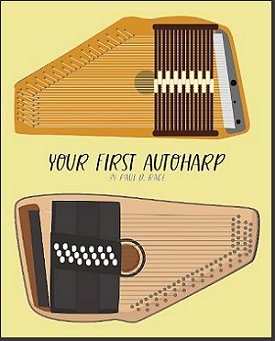 One other major resource is our downloadable book Your First Autoharp.. This is a result of years of answering user questions that, frankly, most autoharp books do not begin to address. One other major resource is our downloadable book Your First Autoharp.. This is a result of years of answering user questions that, frankly, most autoharp books do not begin to address.
Learning to play an autoharp that is in repair and perfect tune is one thing. Owning an autoharp, is another. Countless readers who have acquired autoharps through gifts, inheritance, thrift shops, auction sites, or impulse purchases have no idea where to begin, what to look for, how to troubleshoot minor issues, and so on.
Of course, we also have tips that ease you into playing all sorts of tunes. One reviewer has said it has more "meat and potatoes" than other, much more expensive books.
Please click on the picture for more information.
Other Publications - In addition to those online resources, many good instructional books and dvds are available. Check our "Autoharp Publications" page for details.
Conclusion
The most important thing is to have fun with your autoharp. There is no one "right way" to play it, no matter what some "experts" say. You learn all kinds of things about music just by playing one. In fact, a professional acoustic guitarist just told me that getting his hands on an autoharp when he was young taught him so much about music that he was motivated to take up guitar. Some 40 years later, he's the premier acoustic guitarist in our region.
So there's no downside and a lot of upsides to learning and playing autoharp.
And if you can jam with other people, that's even better.
 Whatever else you get out of our pages, I hope you come away with some great ideas for "sharing the joy." Whatever else you get out of our pages, I hope you come away with some great ideas for "sharing the joy."
And please stay in touch!
- Paul Race


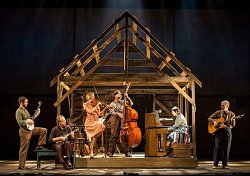 *Bright Star is a Broadway musical that has an autoharp part on a few songs. Generally someone playing mandolin or keyboard picks up the autoharp for those tunes. Unfortunately, the part was written out by a person who apparently had no idea how an autoharp is actually played. I have helped at least one orchestra directory sort it out, but since we were under a time crunch, I never saw the actual score he was working from. So I'm not entirely certain I gave him the best advice in every situation. When I asked on a popular internet forum if anyone else had dealt with this, four people told me basically that, any idiot should be able to figure it out. But that harried orchestra director wasn't an idiot, and I don't think I am either. If you find yourself directing this play and want to use the autoharp to its best advantage, please contact me, and I will help you out. Return. *Bright Star is a Broadway musical that has an autoharp part on a few songs. Generally someone playing mandolin or keyboard picks up the autoharp for those tunes. Unfortunately, the part was written out by a person who apparently had no idea how an autoharp is actually played. I have helped at least one orchestra directory sort it out, but since we were under a time crunch, I never saw the actual score he was working from. So I'm not entirely certain I gave him the best advice in every situation. When I asked on a popular internet forum if anyone else had dealt with this, four people told me basically that, any idiot should be able to figure it out. But that harried orchestra director wasn't an idiot, and I don't think I am either. If you find yourself directing this play and want to use the autoharp to its best advantage, please contact me, and I will help you out. Return.
**A lot of worship composers write everything in the key of G on their guitar, and they use C9 as a "cheat" for going between G and C quickly. But then the music publish transposes the song up to Bb or D. So everywhere the composer's original scratchings specify C9, the published sheet music specifies Eb9 or G9, neither of which are easy to play, and neither of which make any harmonic sense in the arrangement. This is just one of countless nonsensical chord suggestions that find their way into quick-and-dirty modern sheet music. Return.
|  > > |