 Meinhold Autoharps |
  |
| 


|
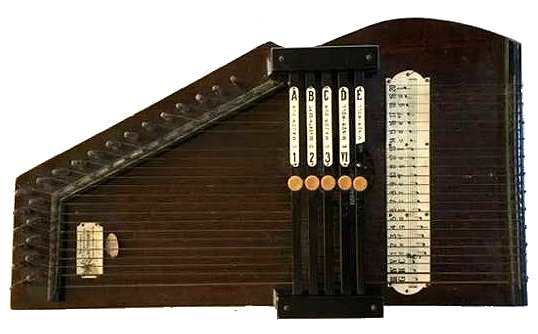
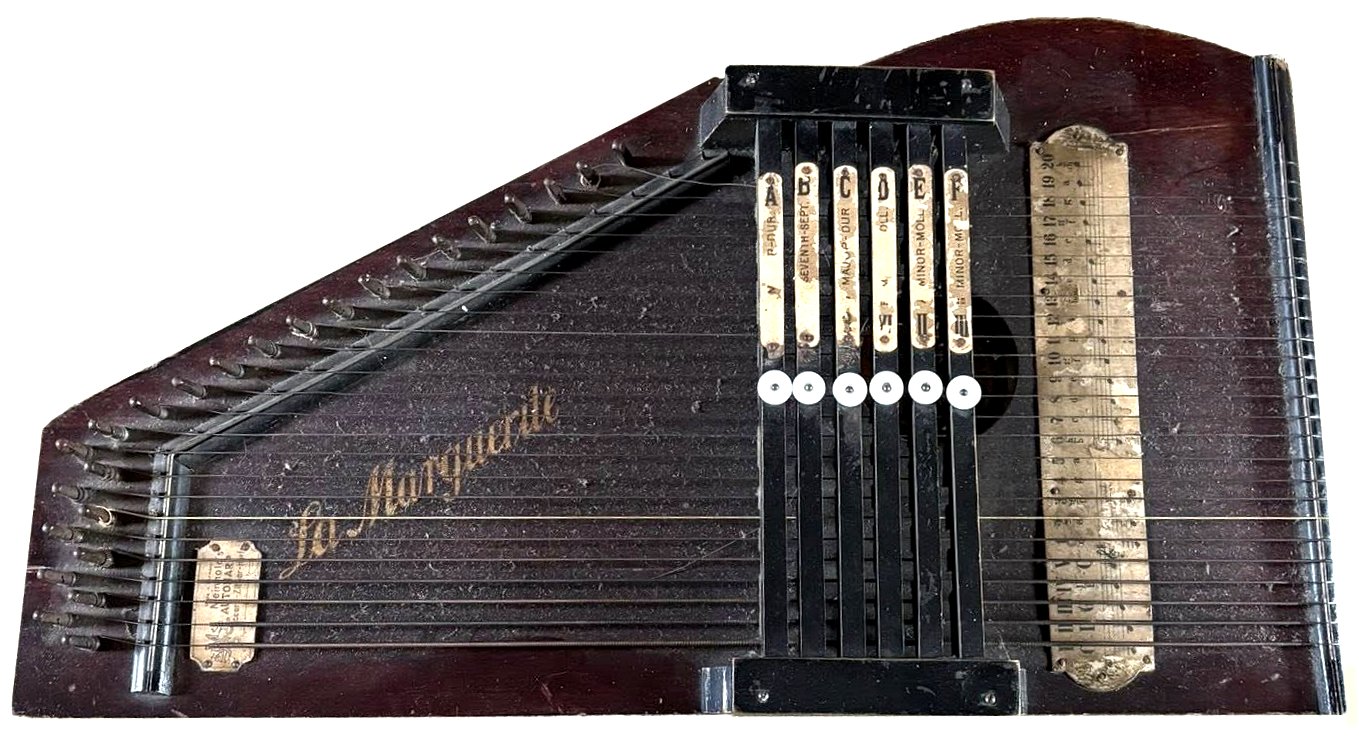
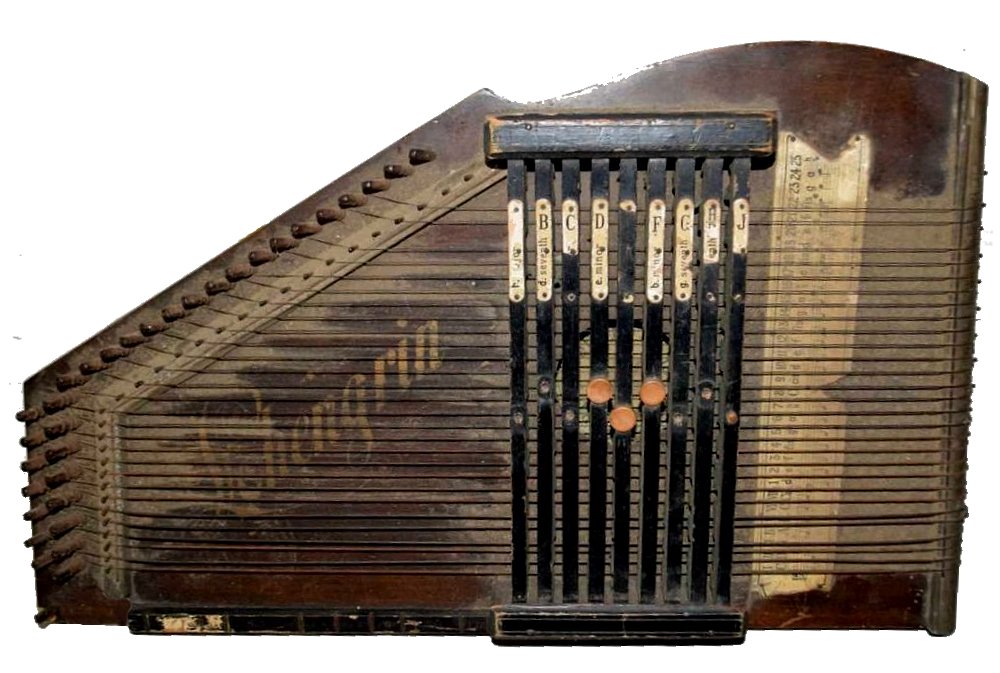
Soon after Karl August Gutter, of Markneukirchen, Germany patented the instrument that we know as the autoharp and sold his patent to another Bavarian, Herman Lindemann, countless builders began copying his invention, mostly without payment to the patent owner
| ||||||||||||||||||||||||||||||||||||||||||||||||||||||||||||||||||||||||||||||||||||||||||||||||||||||||||||||||||||||||||||||||||||||||
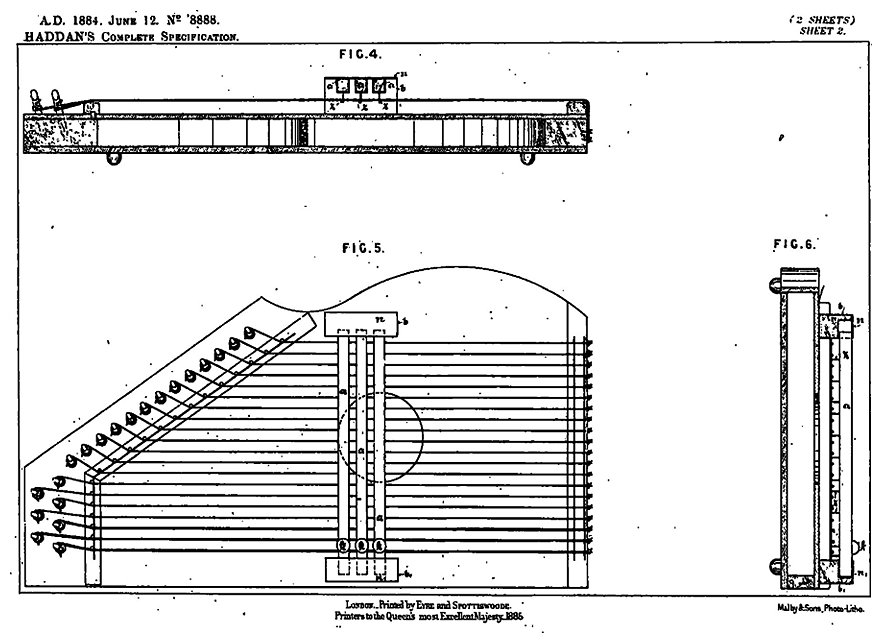
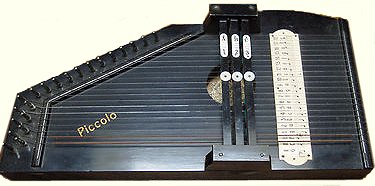
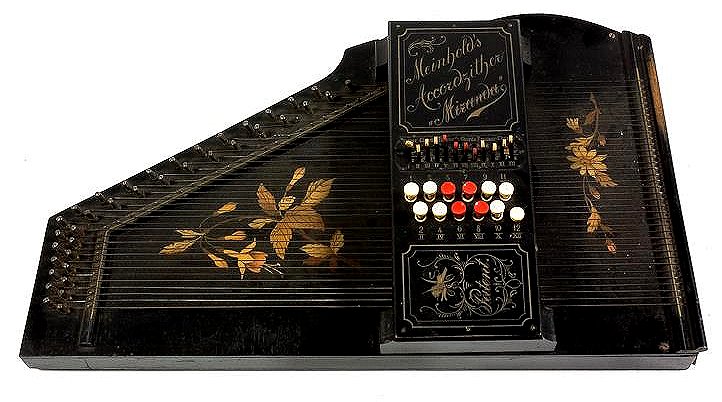
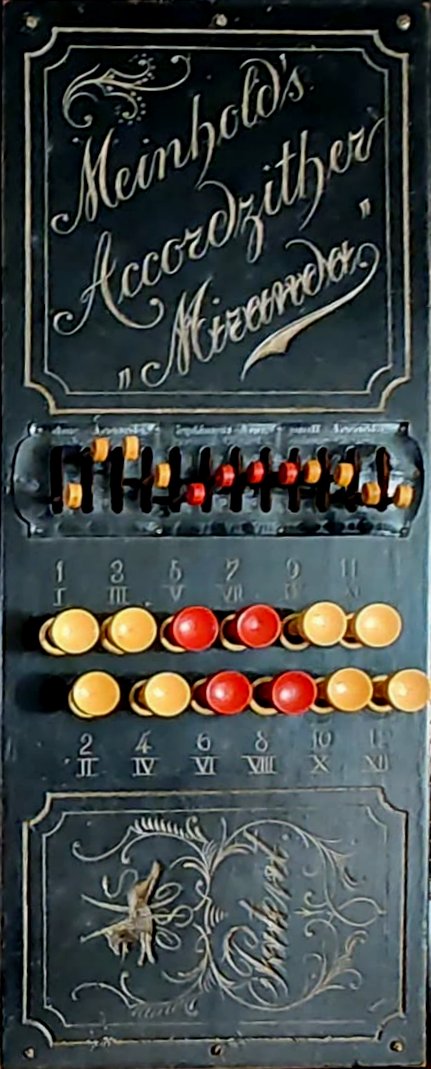
| 3rd Position | D | F | G# | B | D7 | F7 | G#7 | B7 | Dm | Fm | G#m | Bm |
| 2nd Position | C# | E | G | A# | C#7 | E7 | G7 | A#7 | C#m | Em | Gm | A#m |
| 1st Position | C | D# | F# | A | C7 | D#7 | F#7 | A7 | Cm | D#m | F#m | Am |
| Button # | ||||||||||||
Also, you will notice that the Am is a long way from the C, which doesn't help.
Sadly, if you wanted to play the next song in D, you would not only have to move most of the shifters, but you'd have to adjust your hand position radically. Unlike some other autoharps that had fewer chords, but made it easier to transpose (change a song from one key to another).
Contemporary Competition
When the earlier Meinholds were first built, the most popular Zimmerman design was a 5-chorder that could play only in F and C. So the 5- and 6-chorders probably held their own.
But the Miranda - ostensibly Meinhold's flagship product - was actually harder to play than 10- and 12-chorders from other vendors, because the other vendors kept the chords you were likely to use in any given key close together. Frankly, both the Zimmerman 12-chorder and the Canadian Pushbutton 10-chorder were easier to play, even though they played in far fewer keys.
Though Meinhold died in 1913, his company continued production for some years after, though I'm not sure how longthat was. And the Miranda seems to have been licensed to another company, who issued them as the "B&M Miranda."
So it's hard to say when production of Meinhold's autoharps actually ceased.
But the biggest competition for autoharps of all kinds was the radio. And, eventually, the phonograph. Folks no longer had to depend on some famiily member learning a tricky - and possibly limited - instrument to have music in the home.
The only thing that kept Oscar Schmidt's autoharps from fading into obscurity was their adoption by string bands like the Carter Family. Had there been analogous popular German groups who used the German-built autoharps in their music, the Meinhold autoharps may have been able to keep it up.
As it is, dozens of similar zithers, autoharps, psalteries, and related instruments faded into obscurity during the 1930s. Some Meinholds still turn up from time to time, though, and a few are likely worth reworking to make them playable.
Next Steps
If you've got this far, you've learned how much enjoyment you can get out of your autoharp and a few simple songs. Recommended next steps include:- Our "Playing Autoharp Overview" article goes into more detail about playing more advanced songs in more advanced styles, including playing the tunes to songs, using fingerpicks.
The same article also provides links to several helpful videos that cover essentially the same content. So if what we wrote doesn't make any sense to you, the videos might.
- Our "Autoharp Repair Overview" article explains the basic workings of autoharps. Every autoharp owner winds up doing some minor repair on their instrument eventually. Hopefully this article (and others) will show you there's nothing to be afraid of.
- Our "Tweaking Autoharps Overview" explains the most common "hacks" people perform on their autoharps to make them more useful for their preferred style of music, etc. We don't recommend any of these to beginners, but some people do, so we're giving you this resource in case you want more information, or if you just want to know what terms like "semi-diatonic" mean.
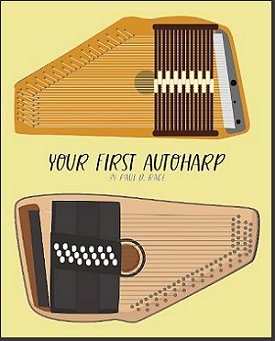 One other major resource is our downloadable book Your First Autoharp.. This is a result of years of answering user questions that, frankly, most autoharp books do not begin to address.
Learning to play an autoharp that is in repair and perfect tune is one thing. Owning an autoharp, is another. Countless readers who have acquired autoharps through gifts, inheritance, thrift shops, auction sites, or impulse purchases have no idea where to begin, what to look for, how to troubleshoot minor issues, and so on.
Of course, we also have tips that ease you into playing all sorts of tunes. One reviewer has said it has more "meat and potatoes" than other, much more expensive books.
Please click on the picture for more information.
Other Publications - In addition to those online resources, many good instructional books and dvds are available. Check our "Autoharp Publications" page for details.
Conclusion
The most important thing is to have fun with your autoharp. There is no one "right way" to play it, no matter what some "experts" say. You learn all kinds of things about music just by playing one. In fact, a professional acoustic guitarist just told me that getting his hands on an autoharp when he was young taught him so much about music that he was motivated to take up guitar. Some 40 years later, he's the premier acoustic guitarist in our region.So there's no downside and a lot of upsides to learning and playing autoharp.
And if you can jam with other people, that's even better.
 Whatever else you get out of our pages, I hope you come away with some great ideas for "sharing the joy."
And please stay in touch!
- Paul Race


>All material, illustrations, and content of this web site is copyrighted ? 2001, 2002, 2003, 2004, 2005, 2006, 2007, 2008, 2009,
2010, 2011, 2012, 2013, 2014, 2015, 2016, 2017, 2018, 2019, 2020, 2021, 2022, 2023, 2024, 2025, 2026 by Paul D. Race. All rights reserved.
Creek Dont' Rise(tm) is a participant in the Amazon Services LLC Associates Program, an affiliate advertising
program designed to provide a means for sites to earn advertising fees by advertising and linking to Amazon.com.
Note: Creek Don't Rise (tm) is Paul Race's name for his resources supporting the history and music of the North American Heartland as well as additional kinds of acoustic and traditional music.
For questions, comments, suggestions, trouble reports, etc. about this page or this site, please contact us.
| Visit related pages and affiliated sites: | |||||
| - Music - | |||||

|
 |
 |

|
|

|
|

|

|

|

|

|

|

|

|

|
|

|
| - Trains and Hobbies - | |||||
 |

|

|  |
 |

|
| - Christmas Memories and Collectibles - | |||||
 |

|
 |

|
 |
|
| - Family Activities and Crafts - | |||||
 |

|

|

|
|
|